Smart Roof and Automation Systems: What Sensors Actually Do
In smart roof systems automation looks like a comfort item, but its real function is damage prevention. A rain sensor closes the system when nobody is home; a wind sensor moves the louvres to a safe position above a set speed. These two sensors directly extend the life of the system.
What Is a Smart Roof System?
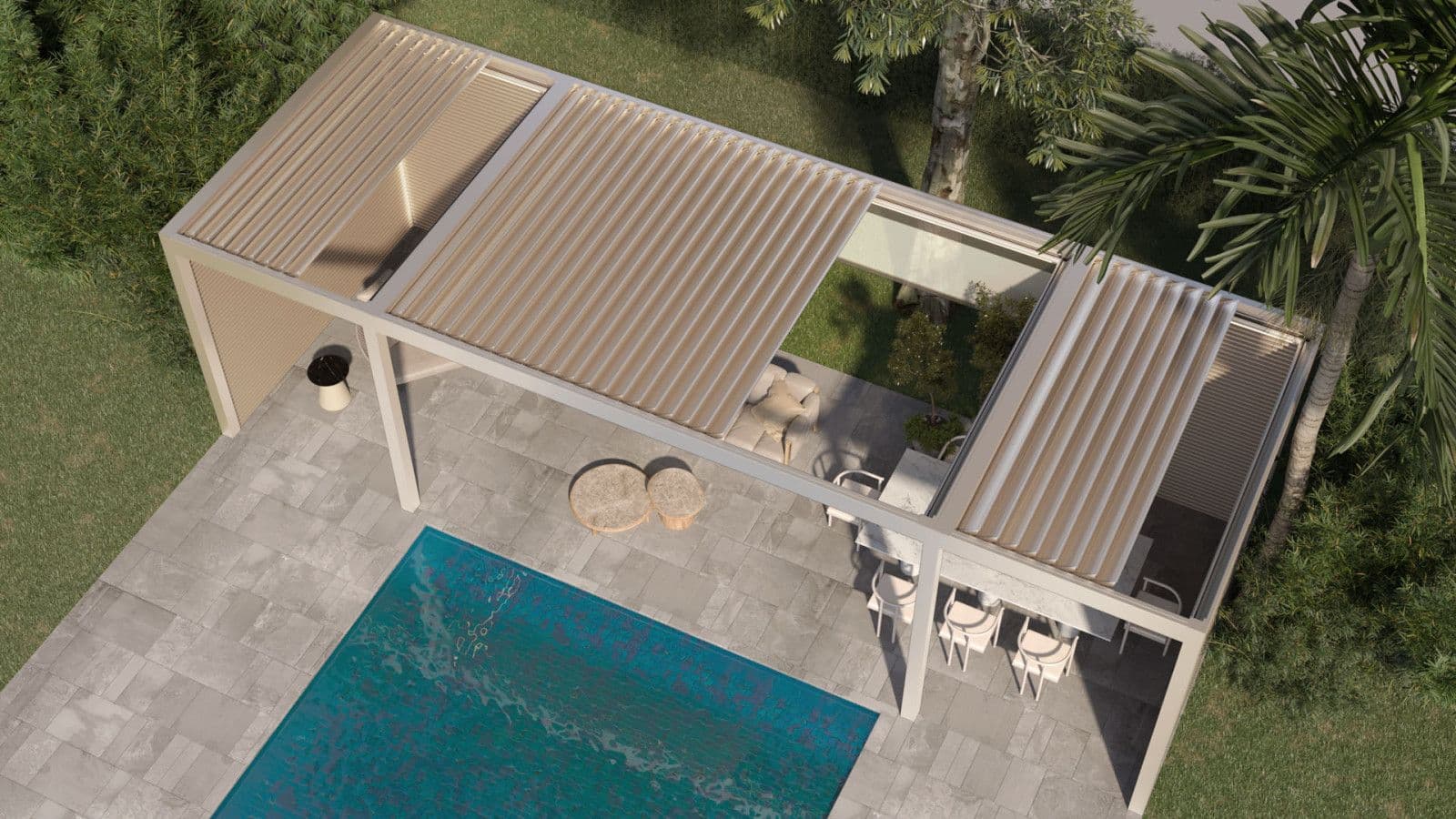
A smart roof is an outdoor covering whose roof moves by motor and can act on external conditions without user intervention. In a bioclimatic pergola the louvres rotate; in a rolling roof the roof opens completely. Both run on 230V tubular motors controlled by remote, wall switch or app.
The word "smart" here is not marketing decoration; it describes a concrete function. The system senses an external condition and responds without the user. A motorised pergola without sensors is motorised but not smart.
The distinction matters in practice because the price difference comes from the sensor and control modules. Sensors can usually be added later, but planning the wiring during production is both cleaner and cheaper.
Rain Sensor: The Most Useful Addition
A rain sensor closes the system at the first drops. Its biggest benefit appears when the user is not at home: the damage prevented to furniture, flooring and electronics often covers the cost of the sensor in a single event. It is the priority addition in holiday homes and houses empty during the day.
The sensor is mounted on or near the roof surface and sends a close command to the motor when it detects moisture. Closing time varies with system size; on a standard residential terrace it is under thirty seconds.
False triggering is a common concern. On quality sensors the sensitivity is adjustable, so dew or light moisture does not close the system unnecessarily.
Wind Sensor: A Safety Item
A wind sensor moves the system to a safe position above a set speed. It is close to essential on motorised awnings, where open-position resistance is 60-80 km/h. On a bioclimatic pergola it moves the louvres to the closed position and brings the system into its 120 km/h range.
The threshold is set according to the system’s resistance and configured at installation. In coastal installations a lower threshold leaves extra margin against sudden gusts.
Without a wind sensor the user has to be at home whenever the weather turns. That is not a sustainable expectation in practice.
Sun Sensor and Timer
A sun sensor provides shading above a set light intensity, which reduces heat gain on the facade and helps keep interiors cooler. A timer positions the system automatically at set times of day and is practical for those with a regular usage pattern.
These two are comfort items rather than damage prevention, so they come after the rain and wind sensors in priority. If the budget is limited, the safety sensors should come first.
Is Smart Home Integration Really Needed?
Google Home, Alexa and Apple HomeKit integration requires an additional module. For daily use a wall switch is enough for most people; the app matters mainly to those who need remote control. Holiday home owners are the typical example of that group.
| Addition | Function | Priority |
|---|---|---|
| Rain sensor | Damage prevention | High |
| Wind sensor | Safety and damage prevention | High |
| Remote control | Basic operation | High |
| Sun sensor | Comfort and heat gain | Medium |
| Timer | Comfort | Medium |
| Smart home integration | Remote control | Low-medium |
| Group control | Multi-unit management | High in commercial use |
Motor Selection and Life
Quality tubular motors exceed 50,000 opening and closing cycles. For a system operated twice a day that corresponds to decades. European motors are quieter with broader guarantee coverage; motors are typically guaranteed for five years.
Redundant Motor
Preferred in commercial use: if one motor fails the system keeps working and a restaurant terrace does not become unusable. Usually unnecessary in residential installations.
Obstacle Detection
Stops movement if an object is in the path of a panel or louvre. Provides both safety and mechanism protection; important in homes with children.
Power Cuts
In a cut the system stays where it is. An emergency crank can be added for manual operation, which lets a system left open be closed in the rain.
The Return on Automation in Commercial Use
On restaurant and cafe terraces automation is not a comfort item but a revenue item. When rain starts, staff do not need to remember to close the system; the sensor does it within seconds and seated customers do not leave their tables.
The reverse does not apply: the system does not reopen automatically when the rain stops, because reopening is left to the user. This is a deliberate design choice — water collected on the louvres would pour down on a sudden opening.
Group control allows several units to be managed with one command. On a terrace with three separate pergolas, closing all of them at once noticeably simplifies the staff’s job.
What Happens If Something Fails?
This is the most frequently asked question about motorised systems. Obstacle detection and overload protection prevent the mechanism from being forced. If a motor fails the louvres stay where they are and a service visit is needed; the system does not open or close by itself.
Left Open
If the motor fails while the system is open, rain protection is lost. The emergency crank exists for this scenario and allows manual closing. We recommend it for holiday homes.
Sensor Failure
If a sensor fails the system falls back to manual; the motor keeps working, only the automatic response is lost. This is not an emergency but it is hard to notice, which is why an annual test matters.
Maintaining the Automation
Sensor surfaces gather dust over time and sensitivity drops. Cleaning the sensor surface and running a trigger test once a year is enough. Motors run on maintenance-free bearings and need no separate servicing.
- Sensor surface: clean with a damp cloth once a year
- Trigger test: drip water on the rain sensor once a year to check
- Remote battery: replacement recommended every two years
- Cable connections: visual check, especially near the sea
Conclusion
The priority order in automation is clear: rain and wind sensors first, then the remote, and smart home integration last. The first two prevent damage and repay their cost quickly; the rest are comfort items that can wait for the budget.
Sensor wiring planned during production is both cleaner and more economical, which is why we recommend deciding on automation at the design stage.