Pergola Viva
Call NowWhatsAppGet a Quote
Rehber

How to Choose a Pergola Manufacturer: A 10-Question Checklist

A pergola is not a catalogue product but a structure made to measure, so choosing the company comes before choosing the product. The difference between two systems that look identical lies in profile wall thickness, structural calculation and installation quality — and those only surface when you ask.
Written by: Pergola VivaPublished: 7 min read

Why the Company Comes Before the Product

In pergola systems the visible surface looks similar; the difference is inside the structure. Profile wall thickness, alloy grade, whether a structural calculation was made and the quality of installation are all invisible from outside. They surface only when asked, and they explain the real reason for a price difference.

Once a system is installed the profile section cannot be changed. An incorrectly sized system causes problems in the first strong wind, and at that point finding someone accountable depends on who built it.

For that reason, starting the evaluation with "who should I buy from" rather than "which product should I buy" gives a more accurate result.

Questions About Materials

The first three questions concern materials and the answers should be concrete figures. A vague reply such as "quality aluminium" is not really an answer. Ask about alloy grade, wall thickness and coating thickness, and ask for them to be written into the quote.

Having these values written into the quote matters. A verbal commitment provides no basis in a dispute after delivery.

  • What is the alloy grade of the structural profile? (6063-T6 is standard)
  • What is the profile wall thickness in mm? (2-2.5 mm standard, 3-4 mm heavy duty)
  • How many microns is the surface coating? (electrostatic powder, 80-100 microns expected)
  • What materials are used in the moving parts? (stainless steel and maintenance-free bearings)

Engineering and Documentation

A pergola is a structure carrying wind and snow loads. A system sized without a project-specific structural calculation has been built on guesswork. Ask for a CE certificate and a structural report, and have their provision written into the quote.

Local wind and snow data must be taken into account. These values differ between the Antalya coast and inland areas; installing the same system everywhere with the same section is not engineering but template work.

  • Is a project-specific structural report provided?
  • Is the system CE certified?
  • What is the wind resistance in closed and open positions?
  • What is the snow load capacity?

Manufacturing and Installation Structure

Whether the same company manufactures and installs determines who you deal with if a problem appears later. Where subcontractors are used, responsibility often ends up between the parties and the customer is passed back and forth.

Is Manufacturing In-House?

A company that manufactures its own systems can retrieve dimensions and model details from its records years later. That noticeably shortens spare parts and motor replacement processes.

Is Installation by Their Own Team?

Installation quality affects long-term performance as much as manufacturing does. A rail that is out of level or badly planned drainage makes even the best system problematic.

Who Handles After-Sales?

Ask whether service is provided outside the guarantee period. A pergola is used for ten years; needing service at least once in that time is normal.

Break Down the Guarantee

A guarantee is not a single period; structure, motor, coating and workmanship are covered for different lengths. "Ten-year guarantee" is misleading on its own because it usually covers only the structure. Each item must be asked about separately.

ItemTypical periodQuestion to ask
Structure and profiles10 yearsWhat situations fall outside?
Motor and electronics5 yearsWhich motor brand and who provides the guarantee?
Surface coating3 yearsIs fading covered?
Installation workmanshipVariesIs workmanship covered?
Glass2 yearsIs breakage covered or only manufacturing defects?

Verifying References and Experience

The number of completed projects and years in business are not enough on their own; what matters is being able to see a project of similar scale to yours. That is the most direct way to understand the real size of a system and the quality of installation.

References matter even more in commercial work: a restaurant terrace failing mid-season means direct lost revenue.

  • Can I see a similar project you have done in my area?
  • How many years have you been doing this and how many projects have you completed?
  • Have you built a span of this size before?

Warning Signs

Some answers are enough on their own to set a company aside. The five signs below deserve careful attention when they appear during quoting; none is conclusive, but each calls for a follow-up question.

None of these proves a company is bad. But all of them are points at which you should ask for written clarity before proceeding.

  • Giving a firm square metre price over the phone — impossible without seeing the site
  • Answering material questions with vague phrases like "quality aluminium"
  • Saying a structural report is not necessary
  • Avoiding a written contract or insisting on verbal commitments
  • Requesting payment in full up front or before installation

What the Contract Should Contain

Verbal commitments provide no basis in a dispute. A thorough contract is a sign of professionalism rather than distrust, and it protects both parties.

Technical Specification

Profile alloy and wall thickness, coating thickness, motor brand, glass thickness and type should be written down and verifiable on delivery.

Dimensions and Scope

Exact dimensions, column count and positions, whether ground preparation is included and who is responsible for electrical supply should all be clear.

Timing and Payment

Delivery date, what happens in case of delay and the payment schedule should be stated. The usual arrangement is a deposit before production and the balance after installation.

How to Read a Quote

A good quote is itemised: materials, automation, side enclosure and installation appear separately. A quote giving a single total means you cannot see how much you would save by dropping any one item.

A quote should include: profile section and alloy, coating thickness, motor brand, sensor list, guarantee periods, installation scope and whether ground preparation is included.

Every item left vague returns as extra cost on installation day. Ground preparation is the item most often left vague.

Conclusion

The right company answers questions with concrete figures, provides structural calculations and certificates, manufactures and installs itself, and sets out the guarantee item by item in writing. When those four hold, the reason for a price difference also becomes clear.

The lowest quote has usually been cut from profile wall thickness, motor quality or installation workmanship. Those three determine the ten-year performance of the system.

All articles
Common Questions

Frequently asked questions about this article

How many quotes should I get?

Three quotes are usually enough and give a sound basis for comparison. What matters is not the number but that the quotes can be compared against the same criteria, which means asking every company the same questions.

Is it wrong to choose the lowest quote?

Not wrong, but you must know why it is lowest. A low price is usually cut from three places: profile wall thickness, motor quality and installation workmanship. If those three are equal and the price is still lower, that is an advantage.

Should I have a written contract?

Yes. The contract should state dimensions, material specification, guarantee periods, delivery date and payment schedule. Verbal commitments provide no basis in a dispute.

Is it bad if the company uses subcontractors?

Not necessarily, but responsibility must be clear. Who will you deal with if a problem appears, and who covers the guarantee? Those answers should be in the contract.

What payment arrangement is normal?

The usual arrangement is a deposit before production and the balance after installation. Requests for full payment up front or before installation should be considered carefully.

Should the site survey be free?

In Antalya and the surrounding area surveys are generally free. A company charging for it may be reasonable if the fee is offset against an accepted quote; but since free surveys are the norm, this can be a differentiator.

How can I verify the company manufactures in-house?

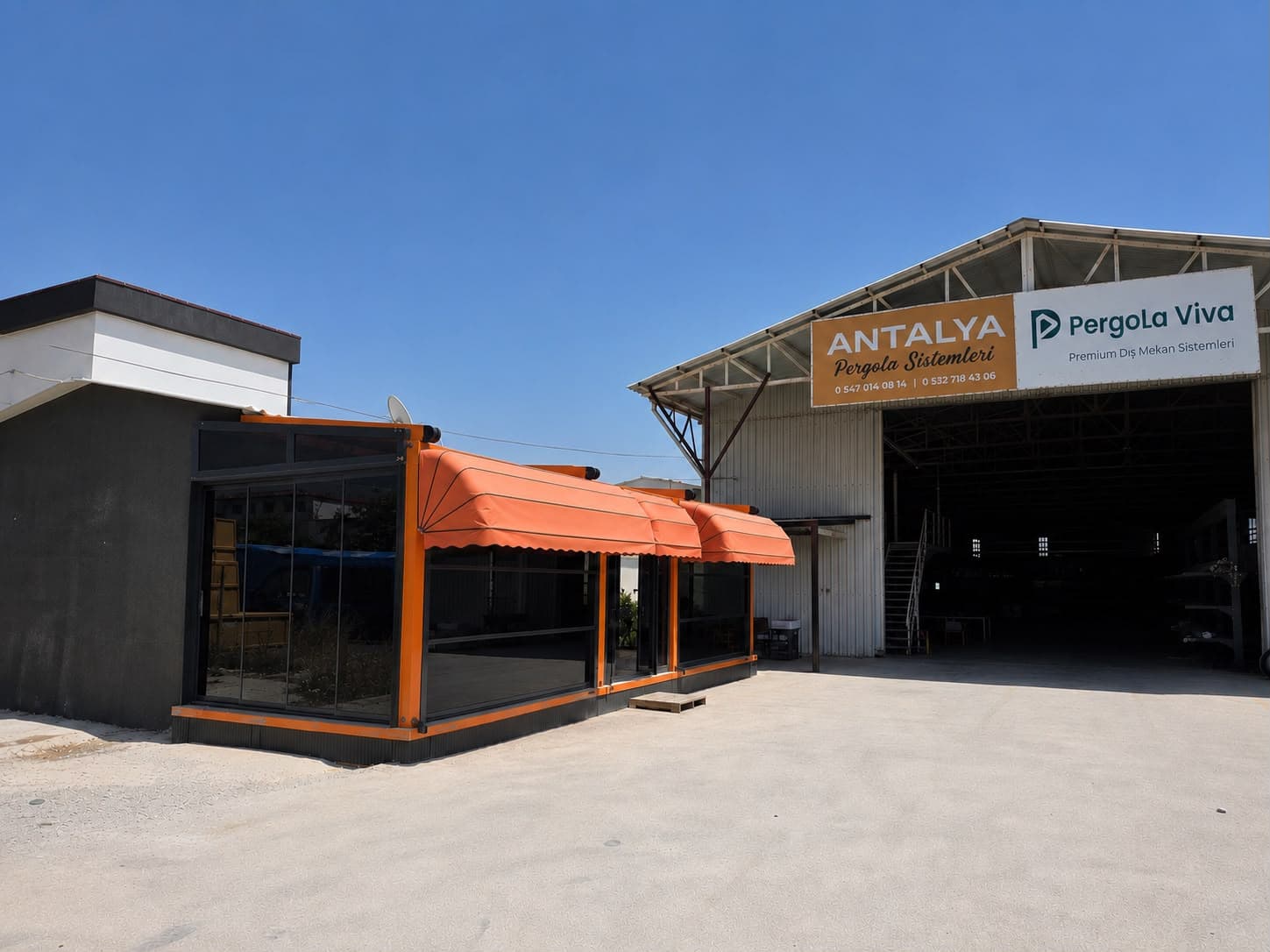
Say you would like to see the workshop. A company that manufactures its own systems will not object. Also ask whether they can retrieve dimensions and model records from past projects; in-house manufacturers can find that information years later.

Survey and design are free

A free survey for your project

This article gives the general picture; the exact answer for your space only comes from an on-site measurement.

  • On-site measurement and 3D design — free
  • No obligation if you do not approve the quote
  • Manufacturing and installation by our own team
  • 5-year warranty on the motor and mechanical parts
0547 014 08 14

Monday – Saturday 08:00 – 18:00 · Outside these hours leave the form and we will call first thing next day

Send via WhatsApp

The survey, measurement and 3D design are free. Your details are used only to get back to you and are never shared with third parties.