Sliding Glass Systems: Elegance and Practicality for Every Space
The architectural philosophy of modern living increasingly celebrates the dissolution of barriers between interior sanctuary and outdoor expanse. Sliding glass systems stand at the forefront of this design evolution, offering sophisticated solutions that transform rigid walls into fluid transitions, confined spaces into open vistas, and ordinary rooms into extraordinary environments flooded with natural light and connection to nature.
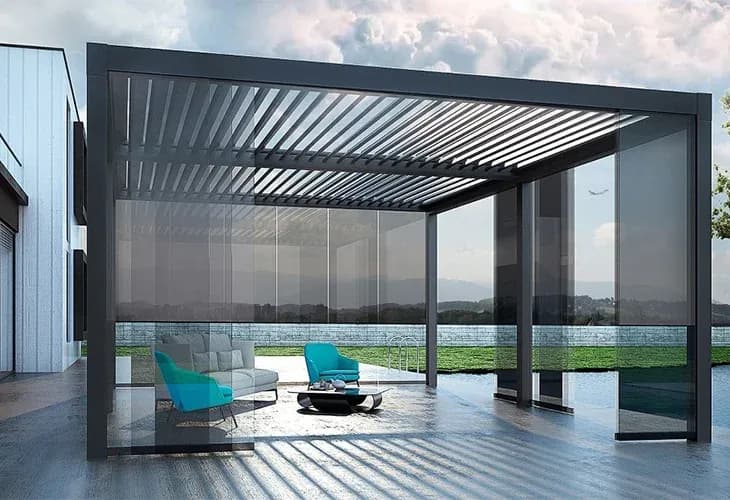
These precision-engineered installations represent far more than mere doors or windows—they embody a lifestyle choice prioritizing transparency, flexibility, and architectural elegance. Whether framing a residential terrace overlooking Mediterranean coastlines, enclosing a luxury restaurant's dining space, or creating convertible conference rooms in corporate headquarters, sliding glass doors deliver unmatched versatility without compromising thermal performance, acoustic comfort, or structural integrity.
At Pergola Viva, we've dedicated ourselves to mastering the art and science of glass systems Turkey installations, bringing European engineering excellence and Turkish manufacturing quality to projects that demand nothing less than perfection. Our sliding glass balcony systems and comprehensive outdoor glass enclosures reflect a commitment to transforming how people experience their spaces—creating environments where light, views, and access flow seamlessly according to need and desire.
What Are Sliding Glass Systems?
Defining Contemporary Glass Architecture
Sliding glass systems comprise large-format glazing panels mounted on precision track mechanisms, enabling horizontal movement to open and close substantial architectural openings. Unlike traditional hinged doors that require swing clearance, or fixed windows that offer no access, sliding configurations maximize usable space while providing flexibility between enclosure and openness.
Modern implementations have evolved dramatically from basic patio doors of previous generations. Today's frameless sliding glass technology employs minimal visible framing, sophisticated hardware concealment, and engineering refinement that enables panels spanning three meters in height and weights exceeding 300 kilograms to glide effortlessly with single-finger operation.
System Components and Architecture
A complete sliding glass installation integrates multiple precision-engineered elements:
Glass Panels: The primary visible component, typically fabricated from tempered or laminated safety glass in thicknesses ranging from 8mm to 12mm depending on panel dimensions and performance requirements. Advanced specifications include low-emissivity coatings for thermal performance, acoustic lamination for sound control, and tinting or decorative treatments for aesthetic customization.
Track Systems: Precision aluminum or stainless steel channels guiding panel movement. Upper tracks support panel weight through suspension systems or rollers, while lower tracks provide lateral stability and weatherproofing. Quality differentiation occurs significantly in track engineering—premium systems deliver decades of smooth operation while inferior alternatives develop resistance, misalignment, and failure.
Roller Assemblies: Heavy-duty bearing mechanisms enabling smooth panel travel despite substantial weight. Superior rollers incorporate sealed bearings preventing contamination, adjustable mounting enabling alignment optimization, and engineered materials resisting wear across millions of operational cycles.
Sealing Systems: Weatherstripping, gaskets, and threshold details preventing water infiltration, air leakage, and sound transmission. Comprehensive sealing distinguishes weather-resistant installations from those vulnerable to the elements.
Handle and Lock Hardware: Functional and aesthetic components enabling panel operation and security. Options range from minimalist recessed handles maintaining clean lines to substantial traditional designs providing architectural statement.
Frame Profiles (for non-frameless configurations): Perimeter aluminum extrusions providing structural support, mounting interfaces, and aesthetic definition. Powder coating in extensive color options enables architectural coordination.
Design Flexibility and Space Optimization
Maximizing Usable Area
The fundamental advantage of sliding glass systems lies in space efficiency. Hinged doors consume substantial square footage for swing paths—area that remains unusable for furniture placement or traffic flow. Sliding configurations eliminate this constraint, enabling:
Furniture Placement Freedom: Position seating, tables, and décor immediately adjacent to glass panels without interference with door operation—maximizing spatial utility particularly valuable in compact urban environments.
Traffic Flow Optimization: Multiple sliding panels enable customized opening widths accommodating everything from single-person passage to complete wall disappearance for events or indoor-outdoor entertaining.
Safety Considerations: Eliminating swing-path hazards prevents door-related injuries common in high-traffic residential and commercial environments, particularly important for child safety and accessibility compliance.
Configuration Versatility
Modern terrace glass installations accommodate diverse architectural contexts through flexible panel arrangements:
Two-Panel Systems: The simplest configuration featuring two panels with one or both operable. Ideal for standard door replacements and modest opening widths (typically 1.5-3 meters).
Multi-Track Configurations: Multiple parallel tracks enable three, four, or more panels stacking compactly when opened. This architecture creates very wide openings (up to 12+ meters) while maintaining manageable individual panel dimensions.
Corner Solutions: Specialized systems incorporate 90-degree corner turns, enabling continuous glass perimeters around building corners—spectacular visual effect maximizing transparency and view access.
Pocket Systems: Panels slide into concealed wall cavities achieving complete disappearance when open. While architecturally dramatic, pocket installations require substantial planning during construction phase.
Aesthetic Customization
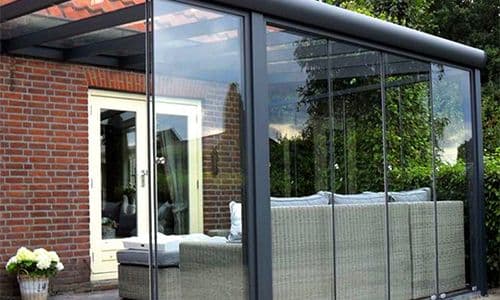
Minimalist Glass Systems: Frameless sliding glass represents the pinnacle of contemporary aesthetic refinement. Ultra-slim profiles (often under 40mm) or complete frame elimination creates uninterrupted transparency where glass appears to float, views remain unobstructed, and architectural purity reaches its apex. These installations command premium investment but deliver unmatched visual sophistication.
Framed Elegance: Visible aluminum profiles provide design opportunities through:
- Powder-coated color matching architectural elements
- Contrasting frame and glass combinations creating visual interest
- Profile width selection influencing aesthetic scale and character
Glass Treatments: Beyond clear transparency, options include:
- Tinted glass reducing glare and solar heat gain
- Reflective coatings providing privacy while maintaining outward views
- Frosted or textured patterns creating privacy zones
- Colored glass making bold design statements
- Custom digital printing incorporating patterns, images, or branding
Material Quality and Durability
Why Aluminum Defines Premium Sliding Systems
The frame and track material selection fundamentally determines system longevity, maintenance requirements, and operational quality. Aluminum has emerged as the definitive choice for luxury outdoor enclosures and demanding applications:
Structural Performance: Aluminum's excellent strength-to-weight ratio enables slender profiles supporting large glass panels without excessive bulk. This characteristic proves essential for maintaining aesthetic refinement while ensuring structural adequacy.
Corrosion Immunity: Marine-grade aluminum alloys resist environmental degradation indefinitely. Coastal installations withstand salt air exposure without rust or deterioration, while urban environments pose no chemical attack concerns. This permanent corrosion resistance eliminates the maintenance burden and eventual failure inherent to steel alternatives.
Thermal Stability: Aluminum withstands temperature extremes from -40°C to +80°C without warping, expanding problematically, or mechanical property degradation. This stability ensures consistent operation and weather sealing regardless of climate stress.
Minimal Maintenance: Powder-coated aluminum surfaces resist fading, chalking, and environmental staining. Occasional cleaning with water and mild detergent maintains appearance—no painting, sealing, or refinishing required across decades of service.
Sustainability: Aluminum's infinite recyclability without quality loss aligns with environmental consciousness. Choosing aluminum demonstrates commitment to responsible material selection without performance compromise.
Glass Engineering and Safety
Modern architectural transparency demands safety-conscious glass specifications:
Tempered Glass: Heat-treated strengthening increases resistance to impact and thermal stress. When failure occurs, tempered glass shatters into small granular pieces rather than dangerous shards—essential safety feature for occupied spaces.
Laminated Glass: Multiple glass layers bonded with polymer interlayers provide enhanced safety (fragments adhere to interlayer preventing dangerous fallout), security (penetration resistance), and acoustic performance (sound dampening). Premium installations often specify laminated glass particularly for ground-floor applications or locations with security concerns.
Insulated Glazing: Dual-pane configurations with sealed air or gas-filled cavities dramatically improve thermal insulation and acoustic isolation. While adding thickness and weight, insulated glass transforms sliding systems into true climate barriers suitable for heated or air-conditioned spaces.
Coating Technologies: Low-emissivity (low-E) coatings reflect infrared radiation improving thermal efficiency, UV-blocking treatments protect interiors from sun damage, and self-cleaning coatings utilize photocatalytic reactions reducing maintenance frequency.
Comparing Sliding vs. Folding Glass Systems
Understanding the distinctions between sliding and folding (bi-fold) glass architectures ensures optimal selection for specific applications:
| Feature | Sliding Glass Systems | Folding Glass Systems |
|---|---|---|
| Operation | Horizontal linear travel | Accordion-style folding |
| Opening Width | Limited by stacking space | Very wide openings possible |
| Space Requirement | Compact—panels stack parallel | Moderate—folded stack projects |
| Operational Smoothness | Excellent—simple mechanics | Good—multiple pivot points |
| Weather Sealing | Excellent—continuous seals | Good—compression seals |
| Acoustic Performance | Superior—stable panel alignment | Good—depends on seal quality |
| Thermal Efficiency | Excellent—consistent gasket contact | Good—variable depending on design |
| Maintenance Complexity | Low—fewer moving parts | Moderate—multiple hinges |
| Visual Impact | Clean, modern, minimalist | Dramatic transformation effect |
| Durability | Excellent—less mechanical stress | Good—hinge wear over time |
| Cost | Moderate to high | High—more complex hardware |
| Best Applications | Standard openings, space efficiency | Maximum opening width priority |
| Architectural Style | Contemporary minimalism | Flexible modern or traditional |
When to Choose Sliding Glass Systems
Sliding configurations excel in scenarios prioritizing:
- Space efficiency where swing or fold clearance is limited
- Frequent operation benefiting from simple, reliable mechanics
- Acoustic isolation requiring superior sound control
- Weather exposure demanding maximum sealing integrity
- Maintenance minimization where simplicity ensures longevity
- Budget consciousness within premium glass category
- Aesthetic minimalism celebrating clean lines and transparency
When Folding Systems May Be Preferable
Folding alternatives suit applications where:
- Maximum opening width is the dominant priority
- Complete wall removal creates desired dramatic effect
- Flexible configurations with various intermediate positions add value
- Architectural drama justifies complexity and investment
Advanced Features: Automatic Sliding Glass and Smart Integration
Motorized Operation
Automatic sliding glass systems transform manual panels into intelligent, effortlessly operated installations. Electric drive mechanisms offer:
Convenience: One-touch button, remote control, or smartphone operation eliminates physical effort—particularly valuable for large, heavy panels or users with mobility limitations.
Accessibility Compliance: Motorized systems enable barrier-free access meeting ADA and similar accessibility standards for commercial and public buildings.
Safety Features: Sophisticated control systems incorporate obstacle detection halting operation if resistance is encountered, preventing injuries and equipment damage.
Smart Integration: Connection with comprehensive building management systems enables scheduled operation, sensor-triggered responses, and remote management capabilities.
Security Enhancement: Motorized locks integrate with security systems providing controlled access, automated securing, and intrusion detection.
Intelligent Automation
Premium automatic movement technology embraces connectivity and environmental responsiveness:
Climate Sensors: Temperature, humidity, and rain detection enable automated responses—opening panels for natural ventilation during pleasant conditions, closing them when rain begins, or maintaining climate-controlled environments based on HVAC system coordination.
Occupancy Detection: Motion sensors and presence detection optimize operation based on space usage, conserving energy while ensuring convenience.
Scheduled Programming: Daily routines automatically open panels during morning hours for fresh air, close them during peak sun exposure, or secure buildings after business hours.
Voice Control: Integration with Alexa, Google Assistant, and Siri enables hands-free operation through natural language commands.
Geofencing: Smartphone location detection triggers automated operation as occupants approach or depart—welcome convenience and security optimization.
Performance Characteristics: Beyond Aesthetics
Acoustic Insulation
Urban environments and commercial installations often prioritize sound control. Quality sliding glass balcony systems deliver meaningful acoustic performance:
Double Glazing: Insulated glass units with optimized cavity widths and gas fills achieve Sound Transmission Class (STC) ratings of 35-42, reducing exterior noise substantially.
Laminated Glass: Acoustic interlayers specifically engineered for sound dampening can elevate performance to STC 45+, approaching the isolation of traditional walls.
Seal Quality: Comprehensive weatherstripping and gasket systems prevent flanking sound transmission around panel perimeters—often the weak point in inferior installations.
Track Design: Precision-engineered tracks minimize vibration transmission and eliminate operational noise—premium systems operate nearly silently.
Thermal Performance
While not matching the insulation value of insulated walls, modern sliding glass systems contribute meaningfully to building thermal efficiency:
Low-E Coatings: Invisible metallic layers reflect infrared radiation, reducing heat loss during winter and solar heat gain during summer. Double-glazed units with low-E coatings achieve U-values around 1.1-1.4 W/m²K—respectable thermal resistance.
Thermal Break Technology: Insulated frame profiles incorporating non-conductive separators prevent heat conduction through aluminum, improving overall thermal performance.
Air Infiltration Control: Quality weather sealing prevents drafts and uncontrolled air exchange, maintaining conditioned interior environments and reducing HVAC loads.
Solar Heat Gain Management: Selective coatings and tinted glass reduce unwanted solar heating during warm months while potentially admitting passive solar warmth during winter—intelligent seasonal balance.
Weather Resistance
Exposure to elements demands robust engineering:
Water Infiltration Prevention: Sloped sills with drainage channels, comprehensive gasket systems, and elevated thresholds prevent rain penetration even during driven storms. Premium systems withstand standardized water spray testing confirming weather integrity.
Wind Load Resistance: Structural calculations ensure adequate resistance to local wind conditions. Properly engineered systems withstand the equivalent of hurricane-force winds without glass breakage or operational impairment.
Debris Protection: Integrated track covers and drainage designs prevent leaves, dirt, and debris accumulation that could impair operation or damage mechanisms.
Installation Excellence: The Pergola Viva Process
Comprehensive Assessment and Planning
Successful sliding glass systems implementations require thorough evaluation and expert planning:
Site Survey: Our technical team conducts detailed measurements, evaluates structural conditions, assesses exposure to weather and sun, identifies electrical requirements for motorized systems, and discusses functional priorities and aesthetic preferences.
Structural Verification: Building structures must support installation loads and operational forces. We assess adequacy or specify necessary reinforcement, ensuring safety and longevity.
Regulatory Navigation: Building codes, condominium regulations, historical district requirements, and accessibility standards all influence specifications. Pergola Viva manages these complexities seamlessly, securing approvals and ensuring compliance.
Custom Engineering: We develop specifications optimized for your context—glass types and thicknesses, frame profiles and finishes, track configurations and panel arrangements, hardware selections balancing functionality and aesthetics, and integration with building systems.
Precision Installation Process
Preparation: Openings must meet dimensional tolerances and squareness requirements. We verify conditions or perform necessary remediation ensuring proper fit.
Waterproofing: Comprehensive moisture barriers, flashing systems, and sealant applications prevent water infiltration—critical for long-term building envelope integrity.
Track Installation: Precision mounting using laser leveling ensures perfect alignment. Even minor deviations cause operational issues and accelerate wear. Our installers achieve the tolerances premium systems require.
Panel Installation: Large glass panels demand careful handling, specialized equipment, and experience. We employ proper lifting apparatus, protective measures preventing damage, and systematic installation procedures.
Adjustment and Calibration: After installation, we meticulously adjust roller heights, verify smooth operation, optimize sealing compression, and calibrate automatic systems if applicable.
Testing and Commissioning: Before project completion, we conduct water penetration testing (when applicable), verify all operational modes, confirm safety features function properly, and ensure client satisfaction.
Training and Documentation: Comprehensive operational instruction, maintenance guidance, warranty information, and emergency procedures ensure you maximize your investment.
Why Pergola Viva for Glass Systems Turkey
Manufacturing Partnerships: Direct relationships with Europe's premier glass system manufacturers ensure authentic premium products, competitive pricing, comprehensive warranties, and technical support.
Installation Expertise: Decades of combined experience inform every project. We understand the details distinguishing exceptional installations from merely adequate ones.
Quality Assurance: Rigorous protocols at every phase—from specifications through final inspection—ensure consistently superior outcomes.
Comprehensive Service: Single-source accountability from design through installation and ongoing support simplifies your experience.
Local Knowledge: Deep familiarity with Turkish climate, architectural preferences, and regulatory requirements positions us to deliver perfectly suited solutions.
Maintenance and Long-Term Care
Routine Maintenance Requirements
Well-installed sliding glass doors require remarkably little maintenance:
Monthly Tasks:
- Clean glass surfaces with standard glass cleaner
- Rinse lower tracks removing accumulated dirt and debris
- Wipe frame profiles maintaining appearance
Quarterly Inspections:
- Verify smooth operation across full travel range
- Check weather sealing for wear or compression loss
- Clear drainage channels ensuring proper water management
- Lubricate rollers and moving components per manufacturer specifications
Annual Professional Service:
- Comprehensive operational assessment
- Roller and track inspection with adjustment as needed
- Hardware tightening and optimization
- Seal and gasket condition evaluation with replacement recommendations
- Cleaning of hard-to-access components
Longevity Expectations
Quality luxury outdoor enclosures deliver exceptional service life:
- Glass Panels: Essentially indefinite with proper care
- Aluminum Frames: 30+ years maintaining structural integrity
- Roller Assemblies: 15-20 years typical residential use
- Weather Sealing: 10-15 years before replacement recommended
- Motors (automatic systems): 10-15 years depending on usage frequency
Proactive maintenance maximizes these expectations, protecting your substantial investment.
Real-World Applications: Transformation Stories
Residential Elegance
A luxury villa in Bodrum featured a traditional wall separating the living room from a spectacular sea-view terrace. Pergola Viva installed a 6-meter-wide frameless sliding glass system with four panels. The transformation: the home's most valuable asset—its view—became the focal point, interior spaces feel dramatically larger despite unchanged square footage, and indoor-outdoor entertaining flows seamlessly. Property valuation increased 12% beyond typical market appreciation.
Commercial Success
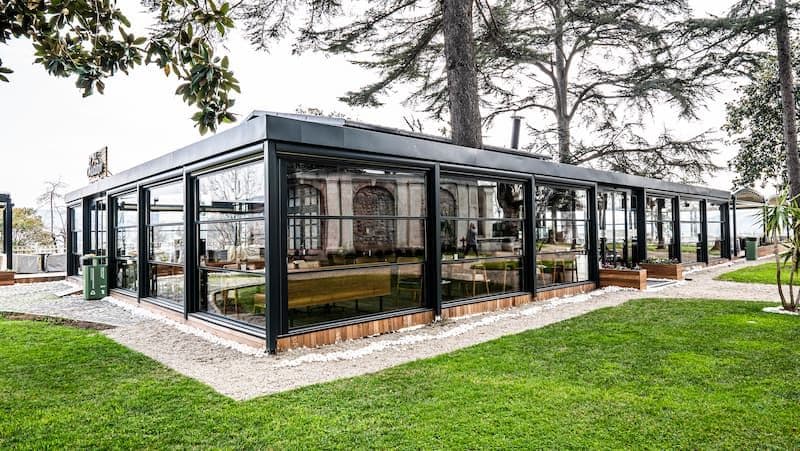
An Istanbul rooftop restaurant invested in comprehensive sliding glass enclosure around their terrace perimeter. Results: extended operational season by three months annually, increased revenue capacity 40% through climate-controlled comfort, achieved distinctive market positioning, and generated substantial social media attention driving customer traffic—complete ROI within 18 months.
Corporate Innovation
A technology company's headquarters incorporated automatic sliding glass systems creating flexible meeting spaces. Rooms reconfigure from enclosed for confidential discussions to open for collaborative sessions. Employee satisfaction surveys showed workspace flexibility ranked among top three appreciated amenities, contributing to talent retention in competitive markets.
Conclusion: Transform Your Vision into Reality
Sliding glass systems represent architectural solutions that transcend mere functionality—they embody lifestyle philosophies celebrating transparency, flexibility, and connection. Whether reimagining residential living spaces, elevating commercial hospitality experiences, or creating innovative corporate environments, these sophisticated installations deliver transformation that must be experienced to be fully appreciated.
The combination of engineering excellence, aesthetic refinement, operational convenience, and performance reliability creates solutions addressing the complex, often competing demands of contemporary architecture—without compromise.
At Pergola Viva, we bring comprehensive expertise to every project, ensuring your vision materializes with the quality, performance, and beauty you deserve. From initial consultation through decades of reliable service, we're committed to excellence at every phase.
Ready to discover how sliding glass systems can transform your space? Contact Pergola Viva today to schedule your personalized consultation. Our glass systems specialists will assess your project, present customized solutions, and provide transparent proposals. Experience why discerning architects, developers, and homeowners throughout Turkey trust Pergola Viva for sliding glass excellence that elevates how spaces function, feel, and inspire. Let us show you the possibilities that await when transparency meets innovation.